The Lincoln Conspiracy: A Diary, a Mummy, and the Escape of John Wilkes Booth
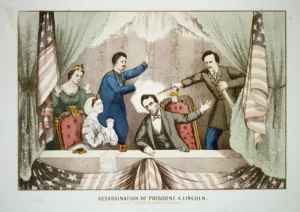
History textbooks describe the assassination of Abraham Lincoln as a tragic but resolved event. On April 14, 1865, only days after the Civil War effectively ended, John Wilkes Booth shot Lincoln at Ford’s Theatre. Booth fled Washington, and Union troops hunted him down. Twelve days later, authorities claimed they killed him in a burning tobacco barn on a Virginia farm.
The case, according to official history, ended there.
Yet for more than a century, historians, investigators, and skeptics have challenged that conclusion. Missing evidence, conflicting testimony, and a bizarre deathbed confession raise an unsettling possibility: what if the man who died in that barn was not John Wilkes Booth—and what if Lincoln’s assassination formed part of a much larger plot?
The Diary With 86 Missing Pages
Suspicion centers on Booth’s personal diary. Authorities recovered a small red notebook shortly after the assassination and presented it as Booth’s written account of his actions and motives during his escape.
When investigators later examined the diary, they uncovered a disturbing fact: 86 pages were missing.
Forensic analysis later confirmed that someone deliberately removed the pages. The cuts occurred after Booth’s supposed death, not during his flight. Reports suggested that the missing pages listed names, financial transactions, and connections far beyond the conspirators who stood trial.
Despite repeated demands from historians and lawmakers, officials never explained who removed the pages—or why. The missing diary sections have never resurfaced.
The Body at the Garrett Farm
Doubts deepen when examining the body authorities claimed belonged to Booth.
On April 26, 1865, Union soldiers cornered Booth and his accomplice David Herold at the Garrett farm in Virginia. Herold surrendered. Booth refused. Soldiers set the barn on fire, and one of them shot the man inside.
Witnesses later raised troubling inconsistencies. Several soldiers and civilians reported that the body removed from the barn did not match Booth’s known appearance. Observers noted differences in hair color, facial features, and scars. Booth had undergone neck surgery years earlier, yet some witnesses could not find the scar. Accounts of the corpse’s leg injury also conflicted with Booth’s well-documented broken leg.
Authorities prevented public identification of the body and quickly buried it, limiting independent examination and fueling further doubt.
“That Wasn’t Booth”
In the years following the assassination, dozens of witnesses came forward with similar claims. Some had participated in the manhunt. Others claimed they had seen Booth alive after April 1865.
These individuals insisted that Booth escaped, possibly with help from Confederate sympathizers or secret financial backers who wanted to destabilize the fragile post-war government. Officials dismissed most of these claims as rumor, confusion, or exaggeration. Still, the consistency of key details kept the controversy alive.
The Texas Confession and the Mummy
The strangest chapter emerged decades later in Texas.
In 1903, a man known as John St. Helen made a deathbed confession to friends and acquaintances. He claimed he was John Wilkes Booth and that he had successfully escaped after killing Lincoln. Shortly after his death, associates preserved his body. The mummified remains later toured the country under the name “David E. George.”
People who viewed the mummy reported striking similarities to Booth, including facial structure and old injuries consistent with Booth’s broken leg. For years, carnival exhibits displayed the body, drawing crowds and renewing debate about Booth’s fate.
The DNA Test That Never Happens
Modern science offers a clear way to settle the controversy: DNA testing.
Living Booth descendants have publicly volunteered genetic samples. The mummy still exists. Lincoln-era bloodstained artifacts remain preserved. Yet authorities have blocked or delayed every serious attempt to authorize testing.
Officials have offered no convincing scientific or legal explanation for these refusals. Critics argue that DNA confirmation could expose not just a historical mistake, but a deliberate effort to protect powerful institutions from embarrassment—or worse.
A Larger Plot?
If Booth escaped, the implications extend far beyond one man. Lincoln’s assassination occurred during a moment of national instability. Some researchers argue that his policies on Reconstruction, federal power, and banking threatened entrenched interests.
In this interpretation, Booth did not act alone—or perhaps did not act as the final trigger at all. Instead, powerful forces may have used him as a pawn or scapegoat.
No document definitively proves a grand conspiracy. However, the missing diary pages, the disputed corpse, the Texas confession, and the blocked DNA testing form a pattern that continues to defy closure.
An Unfinished Chapter
Official history maintains that John Wilkes Booth died in 1865 and that the case closed soon after. Yet unanswered questions persist more than 150 years later.
Until investigators recover the missing diary pages—or allow DNA testing—the assassination of Abraham Lincoln remains not just a tragic moment in history, but an unresolved mystery:
Did the real killer escape, and was America’s greatest tragedy part of something far larger than the story we were told?